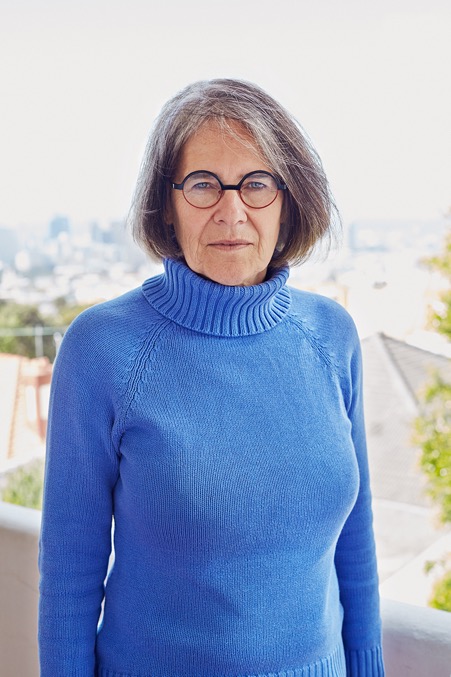
Featured Member: Eline Mestdagh

Featured Member shines a spotlight on the diverse research interests of, and the exciting projects undertaken by, those affiliated with the Cultural Memory Studies Initiative. In this eleventh instalment of the series, we speak to Eline Mestdagh, a PhD student in Ghent University’s Department of History working on ongoing memory conflicts regarding the public (re)presentation of the Belgian colonial past.

What is the topic of your PhD research?

My project looks at how three associations within the Belgian African diaspora in Brussels deal with the colonial past in their anti-racist and decolonial activism. In recent years, Belgium’s colonial past has increasingly become the subject of demands to come to terms with the past, following years of activism and active agenda setting by the sub-Saharan African diaspora in our country. Both within the academic literature on historical (in)justice and memory politics and within the wider postcolonial public debate, however, there is disagreement about the emancipatory potential of politics regarding the past on the road to social justice in the future. It is a well-known critique, voiced by both academics and commentators in the public debate, that memory politics would allegedly be merely a ‘retrospective’ politics, stimulating a “competition of grievances” among (self-proclaimed) victims (Maier, 1993) and therefore functioning as an obstacle for an orientation towards the future (Torpey, 2001). In response to these criticisms, others have of course demonstrated that such a lack of future orientation is not an inherent feature of claims about past injustices, but that whether memory politics allows societies to build future-oriented politics is heavily dependent on the conceptualizations of time and history that inform the politics in question (Bevernage, 2015). It is well known that public controversies about violent pasts often challenge the very philosophical premises of historical thought, such as temporal premises about the distance between past and present. My project starts from these theoretical discussions and takes up the hypothesis that the Belgian debate on its colonial past is not only driven by questions regarding the past an sich but is equally shaped by conflicting relations to that past. Via a methodology characterized by a cross-pollination of research methods common to the disciplines of both history and anthropology, I precisely investigate those relations to the past within three very different Afro-diasporic activist associations and their members and what this implies for assumptions about ‘coming to terms’ with colonial legacies in Belgium.

What first attracted you to studying the Belgian postcolonial debate?

I was trained as a historian at Ghent University, and first got in touch with the loose academic field of theory of history during my third bachelor year, when taking a seminar on ‘Historical Dialogue’ and a series of philosophy of science courses at the University of Helsinki. It was there that I gradually developed an interest not only in history itself but even more in the ways in which historical narratives work ethically and politically. I became interested in the question of why public discussions where history is at stake often become so polarized and what functions history fulfils for the actors involved. For my master’s thesis (2017) I then investigated the uses of the past in the activism of Kick Out Zwarte Piet, a network of activists that mobilizes against the stereotypical figure of Zwarte Piet (Black Pete) in the Netherlands. While doing that research, the limited state of postcolonial research in Belgium in contrast to that in the Netherlands became clear to me, which gave me an important incentive to take a closer look at my own society, instead of crossing national borders to do research.

Your research is highly topical in the wake of last year’s Black Lives Matter protests. What impact do you hope it will have beyond the academic world?

It is clear that in the last few years, and especially in the wake of the Black Lives Matter protests, Belgian policy makers and institutions have picked up on the urgent call to ‘decolonize’: cultural institutions have set up working groups to look critically at their programmes and work environments, local governments have set up participatory trajectories to craft policy recommendations on how to deal with colonial legacies and racism, and more recently the Belgian federal parliament has set up a parliamentary commission to shape a ‘shared narrative’ about the colonial past and to think about appropriate policies for dealing with the material and immaterial colonial legacies in our country.  At the same time it is also very clear that they often appear lost in the mess of the many meanings concepts like ‘reparation’, ‘recognition’, or ‘decolonization’ can have depending on whom you talk you. Internationally, many models have been developed in the field of transitional justice to deal with calls to ‘come to terms with the past’, but this field has also sometimes been said to have become too technocratic, questioning how to best organize a truth commission, how to assess accountability, how to pay reparations, and less focused on the variety of claims and the fact that such models cannot be easily copied from one context to another (De Greiff, 2006). To determine how to react to historical justice claims, it is therefore important to look at the contextual practical functions of historical narratives of the past in struggles of those who ask for it. Our knowledge of how sub-Saharan African diasporas in our country deal with the past in a variety of ways is highly limited. Commentators in the public debate therefore often incorrectly refer to ‘the diaspora’ as if there is one actor that speaks with one voice, thereby repeating existing essentialisms (Mazzocchetti, 2014). Ultimately, I hope that my project can be a contribution to our understanding of the variety of voices on what it can mean to come to terms with the colonial past today. At the moment, for example, I am finishing a paper that looks at some of the counter-truth-telling initiatives that were launched within the diaspora in reaction to the instalment of the parliamentary commission investigating Belgium’s colonial past. Truth-telling initiatives, such as making formerly secret information accessible, have in the field of transitional justice long been seen as important first steps towards reparations, but it is less obvious to see the processes themselves as acts of reparations. Looking at truth-telling as a form of reparation in itself, however, can reveal that what is at stake in truth-telling is, for some, not only a recognition of some previously unacknowledged truth about past events but equally a recognition and reparation of the structural ‘epistemic impeachment’ (Walker, 2010) some victims and marginalized groups experience in the aftermath of historical injustices. This has important implications for how institutions and authorities organize their working groups and participatory trajectories. Given that postcolonial and decolonial scholarship in Belgium is still in its very infancy when compared to other countries, my own project is just one small part of the puzzle. There is an urgent need for more varied academic research not so much on the colonial past itself, but on how its legacies play out in Belgium today.

Are there any specific texts, concepts, or methods from memory studies that you have found particularly useful?

A text that I have found particularly insightful throughout my research, although it might not directly be considered to be part of the field of memory studies, is a well-known text by Joan Scott on the ‘Evidence of Experience’ from 1991. She discusses how some historians working on the emancipation of minority groups are sometimes quick to rely on ‘experience’ as a source of knowledge and ‘evidence’ of ontological realities, rather than lived realities. She considers this reliance on ‘experience as evidence’ as the paradoxical replacement of one foundationalism, the older more positivist approaches in history, by another, the reliance on experience as a new positivism. While on the one hand we have embraced deconstruction to expose historical ‘objectivity’ as not universal but shaped by positionality and power, on the other hand we do not apply the same deconstruction when it comes to ‘experience’, as if experiences can speak for themselves in a vacuum. Scott therefore emphasizes the importance of investigating how experiences and the group identities attached to them take shape in relation to the larger structures (such as racism) in which they are located, and of historicizing them. This has very much informed my approach towards relations to the past as an actively negotiated social process and helped me to see my work as precisely the investigation of this social process by looking at historical experiences not as “the origin of my explanation” but rather as that “which needs to be explained” (Scott, 1991).

I have also found myself inspired by the more recent ‘turn to the future’ in memory studies, for example via the concept of ‘memory activism’ (see, e.g., Rigney 2018; Gutman, Sodaro, and Brown 2017). Following the repeatedly voiced concerns that memory studies is inherently backward-looking, memory scholars now increasingly challenge such assumptions, doing important analytical work to consider different approaches to temporality and to rethink ways to look towards the future without falling back on grand narratives. Especially given the skepticism that is so often expressed towards memory activists ‘supposedly living in the past’, this literature is crucial to understand social movements engaging with the past and to discover ways in which memory and the future work together. I look forward to seeing this turn towards ‘futurity’ develop further.

Are you collaborating with any other individuals, groups, or networks? How important is collaboration to your research?

Since academic research is an intrinsically collective and social process, collaboration has been crucial to my research since the very beginning. As a young researcher relatively new to the academic world, I have often been amazed at how the work that we do is considered a lonely exercise and the fruits of it as your own personal merit, whereas in reality most of our ideas come into existence in dialogue with others. My own research would be impossible without the active and close collaboration with people who help shape my thoughts. This has become even more clear to me during the months of lockdown we experienced last year, where collaborations both inside and outside academia became much more difficult.

Because an important part of my research consists of fieldwork, I have over the past few years worked together with anti-colonial social movements in Brussels, most notably Change ASBL and BAMKO-CRAN. With BAMKO-CRAN, for example, we launched an online series of workshops and lectures on decolonization at Ghent University last year, in collaboration with the university’s Global Studies Research Network, and we have worked closely together within the framework of ‘Les Assises Décoloniales’, a collaborative research project that BAMKO-CRAN launched following the instalment of Belgium’s parliamentary commission on the colonial past in June 2020. Such collaborations have allowed synergies between various forms of expertise that cannot be confined to the strict limits of academic knowledge and are crucial for my research project. Occasionally, I have also worked together on a more ad-hoc basis with associations that are less fundamental to my research but that are equally occupied with questions concerning Belgium’s colonial past, such as INTAL Congo (Brussels) or Labo vzw (Ghent),

Within the academic world, as well, I often engage in collaborative projects. Together with my supervisor, Berber Bevernage, and my close colleagues Walderez Ramalho, Rafael Verbuyst, and Marie-Gabrielle Verbergt, I coordinate the interdisciplinary research forum Thinking About the PASt (TAPAS). Although all of our research projects really differ from each other, we are all interested in how societies relate to the past and in the political and ethical functions of historical narratives. We often organize workshops and reading groups on subjects that can be related to our relationship to the past, such as Restitution, (Super-)Diversity, and History Education or Historical Responsibility. Throughout these activities, I have been able to meet colleagues working on similar questions from various disciplinary backgrounds, but also non-academic experts such as artists, heritage professionals, or educators. I have found this confrontation of highly different perspectives very inspiring over the last few years. At the moment, with TAPAS, we are editing a volume for Cambridge University Press on ‘Populist Historicities’, or how populist movements and governments engage with the past and with history and what those engagements can mean for professional historians trying to position themselves in relation to populism. Ideas for the project originated during Belgium’s first lockdown, in March 2020. This project, and the many thought-provoking collective brainstorm sessions over Skype that spurred it, proved important for me to keep myself inspired during all those weeks we were locked in our homes. I often consider myself privileged to be part of such a stimulating work environment, where reading and discussing texts together and providing detailed feedback on each other’s work is seen as a very normal part of the trajectory of any PhD project.

Are there any recent or forthcoming seminars, conferences, exhibitions, or other events that you are particularly enthusiastic about?

I am first and foremost enthusiastic about a series of lectures hosted this academic year at the Université Libre de Bruxelles on colonial legacies in Belgium, organized within the framework of the new HERICOL project (Héritages coloniaux en Belgique). This broad research project, coordinated by Abdellali Hajjat, is the first to comprehensively look at the current resurgence of social movements that question Belgium’s colonial past and its relation to the present from a sociological perspective. The series of lectures, of which I will give the first one on 20 October 2021, brings together different experts and disciplines and will be a great opportunity to collectively discuss the current state of research on Belgium’s so-called ‘post-colonial momentum’.

Next to that, I am also really looking forward to the fourth conference of the International Network for Theory of History in Puebla, Mexico, next spring. Since the fields of the theory of history and the philosophy of history remain rather fragmented, the network conferences of the INTH form the perfect opportunity to get in touch with researchers dealing with similar theoretical questions but sometimes working in the periphery of more established academic disciplines such as history, philosophy, or sociology. Originally planned to take place in the spring of  2020, the network has been forced to postpone the event twice due to the COVID-19 pandemic. I am really hoping that the event can now finally take place in April 2022 and look forward to seeing some close international colleagues again in real life.

Works Cited

BEVERNAGE (B.). “The Past Is Evil/Evil Is Past: On Retrospective Politics, Philosophy of History, and Temporal Manichaeism.” In: History and Theory, 54 (2015), 3, pp. 333-352.

DE  GREIFF (P.). “Justice and Reparations.” In: The Handbook of Reparations, Oxford, Oxford University Press, 2006.

GUTMAN (Y.), SODARO (A.), and BROWN (A.). Memory and the Future: Transnational Politics, Ethics and Society. Springer. 2010.

MAIER (C.S.). “A Surfeit of Memory? Reflections on History, Melancholy and Denial.” In: History and Memory, 5(1993), 2, pp. 136-152.

MAZZOCCEHTTI (J.), ed. Migrations subsahariennes et condition noire en Belgique. A la croisée des regards. Louvain-La-Neuve, Academia-L’Harmattan, 2014.

RIGNEY (A.). “Remembering Hope: Transnational Activism beyond the Traumatic.” In: Memory Studies, 11 (2018), 3, pp. 368-380.

SCOTT (J.). “The Evidence of Experience.” In: Critical Inquiry, 17 (1991), 4, pp. 773-797.

TORPEY (J.). “’Making Whole What Has Been Smashed’: Reflections of Reparations.” In: The Journal of Modern History, 73 (2001), 1, pp. 333-358.

WALKER (M.). “Truth Telling as Reparations.” In: Metaphilosophy, 41 (2010), 4, pp. 525-545.

Interview conducted via email by Ida Olsen.
 

Reeks: Literatuur en Dekolonisatie

Op verschillende locaties in Gent

Van 20/10/2021 tot 24/11/2021, inkomprijs €5 per avond

20 oktober: Sibo Rugwiza Kanobana & Lindah Leah Nyirenda over het zwarte perspectief

26 oktober: Sarah Adams & Karin Amatmoekrim over een gedekoloniseerde canon

3 november: studenten NDeko FLW & Gloria Wekker over een gedekoloniseerd curriculum

10 november: Warda El-Kaddouri & Rasit Elibol over De nieuwe koloniale leeslijst

17 november: Lieselot De Taeye & Gia Abrassart over meertaligheid

24 november: Jessica de Abreu & Badra Djait over een gedekoloniseerde bibliotheek

Hoe kunnen we de literatuurstudie dekoloniseren? Dat vraagt de UGent zich dit najaar af in de zesdelige reeks ‘Literatuur en dekolonisatie’. In co-curatie met Warda El-Kaddouri en Sibo Rugwiza Kanobana organiseren de Humanities Academie en de vakgroep Letterkunde daarom geen lezingen, maar wel diepgaande gesprekken met schrijvers, filosofen, journalisten en bibliothecarissen op verschillende locaties in de Gentse binnenstad. Doel is om experten van buiten de universiteit aan het woord te laten en ook de stad en de studenten in het denkproces te betrekken om zo tot een aantal actiepunten voor de dekolonisatie van de opleiding Letterkunde te komen. Onder meer Gloria Wekker, ondertussen een academische superster in dit domein, staat op het programma, en verder komen ook toonaangevende stemmen als Karin Amatmoekrim, Gia Abrassart en Jessica de Abreu aan het woord.

De impact van Black Lives Matter, de aanvallen op de standbeelden van Leopold II en de ophef rond de canonieke status van een schrijver als Jef Geeraerts hebben het belang van dekolonisatie in onze maatschappij recent nog bevestigd. Literatuur en literatuurstudie zijn primaire vindplaatsen voor wie het koloniale verleden en zijn nawerking ernstig in de ogen wil kijken. Romans, reisverslagen en theaterstukken speelden een ondersteunende en zelfs vormende rol in het verspreiden van het imperiale denken. Ook de architectuur van de literatuuropleidingen – de opdeling in verschillende talen, de focus op canonieke schrijvers in lectuurlijsten, de eurocentrische labels in de bibliotheekcatalogi – weerspiegelen nog grotendeels een imperiale, koloniale zienswijze. De reeks wil daarom een aantal vragen centraal op de agenda zetten: Welke perspectieven komen aan bod in literatuur en de studie ernaar? Welke verhalen en woorden gebruiken we om het koloniale tijdperk te verbeelden? Hoe kan je koloniale literatuur vanuit een hedendaags perspectief lezen? En hoe kunnen we de opleidingen in een meer gedekoloniseerde richting sturen?

De vakgroep werkt voor de reeks samen met een hele reeks partners: deBuren, de Nederlandse ambassade in Brussel, NTGent, Poëziecentrum, Amsab, Africa Platform, Bibliotheek De Krook, KASK, GUM, Deko FLW, Avansa en het UGent Human Rights Research Network. Meer informatie over de reeks en de inschrijvingsmodaliteiten is te vinden op de website van de Humanities Academie.

Writing Transitional Justice: A Conversation with Antjie Krog

When: Wednesday 20 October 2021, 5.00 p.m. – 6.30 p.m.

Where: Studio Les Ballets C de la B (S3), Bijlokekaai 1, 9000 Gent (https://bijlokesite.gent.be/; building no. 7)

Register for in-person attendance or online participation (via Zoom): https://webappsx.ugent.be/eventManager/events/transitionaljusticeantjiekrog

Can literature contribute to justice? This question lies at the heart of the increased attention to literary texts in transitional justice processes. Poetic language does not necessarily embellish the world; it also enables us to see what is hidden, and to better grasp experiences of harm and injustice. Likewise, stories allow us to make sense of the world and to foreground demands for human rights and dignity.

Antjie Krog’s oeuvre has played a seminal role in shaping our understanding of the relationship between literature and justice. Best known internationally for Country of My Skull (1998), one of the most influential works of literary non-fiction on the South African Truth and Reconciliation Commission, Krog is the acclaimed author of numerous poetry collections in Afrikaans as well as several prose works in English that explore the legacies of apartheid and the struggle to create a more humane society.

In this conversation with Brigitte Herremans, she will discuss issues of trauma and memory, the aesthetics and ethics of witnessing, the power of testimony, and the value of the arts in transitional justice endeavours.

The event will be held in English. All are welcome. Admission is free, but registration is required. For more information, please contact Brigitte Herremans.

Organized by the Cultural Memory Studies Initiative, the Justice Visions project, the UGent Human Rights Research Network, and the Faculty of Law and Criminology as part of the UGent Writer in Residence programme. 


Literatuur en overgangsrecht: Een gesprek met Antjie Krog

Wanneer: woensdag 20 oktober 2021, 17.00 u. – 18.30 u.

Waar: Studio Les Ballets C de la B (S3), Bijlokekaai 1, 9000 Gent (https://bijlokesite.gent.be/; gebouw 7)

Inschrijven voor fysieke of online deelname (via Zoom): https://webappsx.ugent.be/eventManager/events/transitionaljusticeantjiekrog

Kan literatuur bijdragen aan rechtvaardigheid? Deze vraag staat centraal in de groeiende aandacht voor literatuur in processen van transitional justice of overgangsrecht. Poëtische taal maakt de wereld niet noodzakelijk mooier; ze stelt ons ook in staat om wat verborgen is te zien, en om leed en onrecht beter te duiden. Verhalen laten ons toe de wereld te begrijpen en de roep om respect voor mensenrechten en menselijke waardigheid kracht bij te zetten.

Het oeuvre van Antjie Krog is bepalend geweest voor ons denken over de relatie tussen literatuur en rechtvaardigheid. Krog is de veelgeprezen auteur van tal van poëziebundels in het Afrikaans alsook enkele prozawerken in het Engels die handelen over de erfenis van de apartheid en de strijd voor een ​​meer humane samenleving. Ze is internationaal vooral bekend van Country of My Skull (1998), in het Nederlands vertaald als De kleur van je hart, een van de meest invloedrijke literaire non-fictiewerken over de Zuid-Afrikaanse Waarheids- en Verzoeningscommissie.

In dit gesprek met Brigitte Herremans gaat Krog in op kwesties als trauma en herinnering, de esthetiek en ethiek van het getuigen, de kracht van getuigenissen en de rol van kunst in het streven naar transitional justice.

De voertaal is het Engels. Iedereen is welkom. Deelnemen is gratis, maar inschrijven is verplicht. Voor meer informatie kunt u contact opnemen met Brigitte Herremans.

Georganiseerd door het Cultural Memory Studies Initiative, het Justice Visions project, het  UGent Human Rights Research Network en de Faculteit Recht en Criminologie in het kader van het UGent Writer in Residence programma.

Photo credit: Antonia Steyn

dMSA: Careers in Memory Studies

Wednesday 17 March 2021, 5 p.m. – 6.30 p.m. CET
Please register via this link: https://ugent-be.zoom.us/meeting/register/tJMrf-yhpzopHNLHh64Tk-S_xfCn3e2UBQA0
The event will also be livestreamed on YouTube: https://youtu.be/sXTcZ9GZ6dA

Video recording available here: https://ugent-be.zoom.us/rec/play/5JFkz6vXxMk5IWgm7RbMp2Ey2tK2ry4D77j5xOxlSGUZ8BNfw6s5mB0xwQ9RXUxXGnrruvsGdeaa6D4U.sDsD7RIMiHvEEJnk

How to go about building a career in memory studies? This interactive event will give graduate students and early career researchers an opportunity to pick the brains of a geographically and disciplinarily diverse panel of more experienced scholars, who will share do’s and don’ts, tricks of the trade and pitfalls to avoid.

  • Miguel Cardina (CES, University of Coimbra; history)
  • Chandrima Chakraborty (McMaster University; English and cultural studies)
  • Susannah Eckersley (University of Newcastle; museum and heritage studies, cultural studies)
  • Jeremy F. Walton (Max Planck Institute for the Study of Religious and Ethnic Diversity; anthropology)
  • Jessica K. Young (New College Florida; literary studies)
  • Magdalena Zolkos (Australian Catholic University / Goethe University Frankfurt; political science)

Convened by Stef Craps (Ghent University / MSA Executive Committee)

Miguel Cardina is a Senior Researcher at the Centre for Social Studies of the University of Coimbra, Portugal. He is currently coordinating the project “Crossed Memories, Politics of Silence: The Colonial-Liberation Wars in Postcolonial Times” (CROME), sponsored by the European Research Council. CROME’s main objective is to produce a history of the memory of the colonial-liberation wars fought by the Portuguese state and the pro-independence African movements. Cardina is the author or co-author of several books, book chapters, and papers on colonialism and anticolonialism; political ideologies in the sixties and seventies; and the dynamics between history and memory. His recent academic work, focused on Portugal and on the former African Portuguese colonies, contributes to the ongoing conceptual and epistemological discussions in the interdisciplinary field of Memory Studies regarding the debates about memory historicisations, memory in the public space, and between politics, power, and representations.

Chandrima Chakraborty is University Scholar and Professor in the Department of English and Cultural Studies and Director of Centre for Peace Studies at McMaster University. She specializes in the literatures and cultures of South Asia and its diaspora, with a focus on history, nationalism, and public memory. Publications include Masculinity, Asceticism, Hinduism: Past and Present Imaginings of India (2011), Mapping South Asian Masculinities: Men and Political Crises (2015), and the co-edited anthology Remembering Air India: The Art of Public Mourning (2017). Her current research involves creating a memory archive on the 1985 Air India bombing at McMaster Library, for which she is conducting interviews with and collecting artefacts from families of those who lost loved ones on AI Flight 182, and collaborating with creative artists working on remembrances of the Air India bombings. She is also conducting research on the relation between race and the current global pandemic focusing on Asian Canadians and Indian Muslims.

Susannah Eckersley is Senior Lecturer in Media, Culture, Heritage at Newcastle University, UK; Associated Research Fellow at the Leibniz-Zentrum für Zeithistorische Forschung, Potsdam; and co-editor of the Routledge book series “Critical Heritages of Europe”. Her research focus is interdisciplinary, with specialisms in identities, contested belonging, and populism; memory and difficult histories; migration, diversity, and representation. Susannah’s research focuses on the ways these issues are represented, reflected, or neglected in museums and heritage, in commemorations and protests, and in the politics of heritage and memory. She leads the collaborative research project En/Counter/Points: (Re)Negotiating Belonging through Culture and Contact in Public Space and Place (funded by HERA (Humanities in the European Research Area) from 2019-2022). Previously she was the deputy project co-ordinator of CoHERE: Critical Heritages – Performing and Representing Identities in Europe (funded by European Commission Horizon 2020 from 2016-2019) and a researcher on the European Commission FP7 project MeLA: European Museums in an Age of Migrations (2011-2015). She has recently co-edited Dimensions of European Heritage and Memory (Routledge, 2019).

Jeremy F. Walton is a cultural anthropologist whose research resides at the intersection of memory studies, urban studies, and the comparative study of empires and imperialism. He leads the research group “Empires of Memory: The Cultural Politics of Historicity in Former Habsburg and Ottoman Cities” at the Max Planck Institute for the Study of Religious and Ethnic Diversity. Prior to his current position, he held research and teaching fellowships at the Center for Advanced Studies of Southeastern Europe at the University of Rijeka, the CETREN Transregional Research Network at Georg August University of Göttingen, Georgetown University’s Center for Contemporary Arab Studies, and New York University’s Religious Studies Program. In late 2021 or early 2022, he will inaugurate the research group REVENANT—Revivals of Empire: Nostalgia, Amnesia, Tribulation at the University of Rijeka, with support from a European Research Council consolidator grant. Dr. Walton’s first monograph, Muslim Civil Society and the Politics of Religious Freedom in Turkey (Oxford UP, 2017), is an ethnography of Muslim NGOs, state institutions, and secularism in contemporary Turkey. He is also the co-editor of several volumes, including Anthropology and Global Counterinsurgency (U of Chicago P, 2010) and Art and Politics in the Modern Period (U of Zagreb Faculty of Humanities and Social Sciences, 2019).

Jessica K. Young is an Assistant Professor of Global English at New College of Florida. She received her Ph.D. from the University of Illinois, where she founded the Future of Trauma and Memory Studies reading group and co-edited, with Michael Rothberg, Days and Memory, the blog of the Initiative in Holocaust, Genocide, and Memory Studies. In 2018, she was a Visiting Graduate Researcher at University of California, Los Angeles. Her research has been published in Memory Unbound: Tracing the Dynamics of Memory Studies.

Magdalena Zolkos — Ph.D., Humboldt Research Fellow at Goethe University Frankfurt at Frankfurt Memory Studies Platform, and formerly Senior Lecturer at Australian Catholic University at the Institute for Social Justice. Her expertise include psychoanalysis, trauma theory, affect theory, witnessing, and testimony. She is the author of Restitution and the Politics of Repair: Tropes, Imaginaries, Theory (Edinburgh University Press, 2020) and Reconciling Community and Subjective Life: Trauma Testimony as Political Theorizing in the Work of Jean Améry and Imre Kértesz (Bloomsbury, 2010).

CFP Mnemonics 2021: Memory and Migration – POSTPONED

Call for Papers Mnemonics 2021 Summer School: Memory and Migration (Sandbjerg Manor, Denmark, 18-21 August 2021)

The ninth Mnemonics: Network for Memory Studies summer school will be hosted by Aarhus University from Wednesday 18 to Saturday 21 August 2021, at the historical Sandbjerg Manor in Southern Denmark.

The annual Mnemonics summer school brings together junior and senior scholars in the interdisciplinary field of memory studies, affording PhD students from around the world the opportunity to receive extensive feedback about their projects from distinguished memory experts and to catch up with the newest methodological and theoretical trends in memory studies. Each meeting features three keynotes and about 24 PhD student presentations followed by in-depth commentaries by senior scholars from partner institutions. Mnemonics is a great platform for learning, mentoring, and networking, and specifically designed to meet the needs and interests of the next generation of memory scholars.

The 2021 topic will be Memory and Migration. Wars, political upheavals, global inequality, economic crises, and climate change contribute to extensive migrations. The movement of people – close to home, to neighboring countries, and around the globe – is replete with memory phenomena, opportunities, and problems. Both moving and receiving communities have interesting and often conflictual transcultural and transnational experiences as a result of migrations that set their collective memories on new trajectories. Moreover, memory factors play a decisive role in migrants’ decisions on how to plan and implement their flight or travel. At the same time, the self-perception of receiving communities, including their own memories of migratory events, influence how they respond to people crossing borders and seeking shelter and opportunity in their midst. Sometimes whole societies appear to be on the move without even having set foot in a foreign country, as happened after the end of the Cold War when the rules of everyday life changed rapidly in Eastern Europe and rendered cherished memories dysfunctional. Finally, the movement of people comprises a vast spectrum of ‘migrants’ including war refugees, workers, tourists, and exchange students, and all these activities feature relevant memory components and implications. Finally, memory is itself a migratory phenomenon crossing national and cultural borders in predictable as well as surprising patterns.

Confirmed Keynote Speakers  

Michael Rothberg, University of California, Los Angeles
Tanja Thomas, University of Tübingen
Barbara Törnquist-Plewa, Lund University

Possible Topics

Migration studies is an established field of academic research within the Humanities and Social Sciences, and migration has been identified as a key factor of “traveling memories” (Erll, 2011). But the intersection between memory studies and migration studies is still an emergent field. Volumes such as Memory and Migration (Creet and Kitzmann, 2011), History, Memory and Migration (Glynn and Kleist, 2012), and Memories on the Move (Palmberger and Tošić, 2016) stand out as broad introductions. The volume Migration, Memory and Diversity (Wilhelm, 2016) focuses specifically on Germany, while the Danish research project on “The Postmigrant Condition” has addressed a variety of art-forms that oppose current conceptions of migration and integration and searched for new ideas of citizenship beyond the nation-state (Petersen and Schramm, 2017). The Mnemonics 2021 summer school will explore further, both theoretically and through the study of particular cases, the interplay between migration and memory. It aims to expand and refine our conceptual and methodological tools for capturing this nexus by approaching our topic along three axes of inquiry:

  • Memories of Migration, i.e., the memories of migrants and of their travel and home cultures, the receiving countries’ remembrance of migration processes, the (in)ability of migrants’ cultural productions to transcend national and cultural borders, and the extent to which mediatized memories of forced or voluntary human movement in one context trigger and frame the recollection of migration processes in other contexts.
  • Memories for or against Migration, i.e., the way in which processes of remembering and forgetting give purpose, velocity, and direction to the movement of people, how memory and forgetting are implicated in fantasies and practices of settledness and non-migration, and the relevance of memory and forgetting for social, cultural, economic, political, and legal integration.
  • Migration of Memories, i.e., the intersection, dialogue, or conflict between different memory cultures in multicultural or postmigrant societies, the traversal of cultural borderlines that brings forth a hybridization of historical legacies, the travel and circulation of narratives, images, and models of remembrance, including the way in which migration brings disparate perceptions of the past into contact which each other.

We invite paper proposals from PhD students that contribute to any of these lines of inquiry or explore their points of intersection. We welcome contributions from across disciplines reflecting on the cultural, social, methodological, or ethical issues in this emerging field of research. Possible topics include, but are certainly not restricted to:

  • How do refugees, communities, and the media remember and forget the so-called migration crisis?
  • How do cultural memories influence the reception of migrants and other moving people?
  • How do the politics of memory and forgetting shape migration policies and migration decisions?
  • What affects and emotions inform and support the memories of migration?
  • What transcultural and transnational memories develop through moving experiences?
  • Do classic immigration and classic emigration countries sport specific memory regimes?
  • How does memory facilitate racism, and how can memory prevent the reproduction of racism?
  • What memories of migration make the most political and moral sense?
  • What new memory communities develop through migration processes?
  • What theoretical tools of memory studies – cosmopolitan, antagonistic, agonistic, transcultural, hybrid memories – are particularly useful to understand the interdependence of memory and migration? What new tools need to be developed?
  • What happens when memories migrate?
  • How and why do memories travel?
  • What factors facilitate or obstruct the transcultural circulation of memories?

Format

The summer school will include several keynote sessions and general discussions. The main emphasis, however, is on the presentation of PhD work in progress in the form of panels of three students who each give a 15-minute talk that is based on their ongoing research while also relevant to the theme of this year’s school. In order to foster feedback and discussion, each panel will be chaired by a senior scholar who acts as respondent and kicks off the extensive Q&A. The summer school will also include a workshop on professional skills and career planning.

Participants are expected to be able to present their work in an accessible manner to the group at large within the time allotted. They are also expected to pre-circulate their paper to the other members of their panel and to the organizers at least three weeks in advance of the school. Finally, they are expected to be in full attendance for the duration of the school.

Practical Information

Local Organizers

Mnemonics 2021 will be hosted by “Uses of the Past” at Aarhus University. It is being organized by Prof. Wulf Kansteiner and Prof. Hans Lauge Hansen in collaboration with Associate Prof. Jessica Ortner (University of Copenhagen).

Where?

All events will take place at Sandbjerg Manor. Sandbjerg Manor is located in the southernmost part of Jutland, close to the German border. We kindly advise participants traveling by plane to arrive/depart via Hamburg airport and then proceed by train to Flensburg. The organizers will provide a shuttle service from Flensburg to Sandbjerg Manor.

When?

Wednesday 18 August 2021, 3.00 p.m. (check-in) – Saturday 21 August 2021, 3.00 p.m. (check-out).

Costs 

The registration fee for the summer school is €150; successful applicants will be expected to pay this fee in advance (more information to follow). The fee covers tuition, single room accommodation (three nights), and all breakfasts, lunches, refreshments, and dinners.

Financial Aid

Memory studies is an increasingly global field, and we hope to see this reflected in the composition of the participant group. We therefore encourage doctoral students based at non-European institutions, particularly in the global South, to apply for admission to the summer school. In order to facilitate participation from the global South, the Danish Memory Studies Network offers the possibility of applying for financial aid (travel expenses and/or reduced fees), which will be awarded on the basis of merit and need. If you want to be considered for financial aid, please indicate this in your application, include a budget estimate, and disclose other sources of funding you have access to.

Applications

Submissions are open to all doctoral students interested in memory studies. Half of the 24 available places are reserved for students affiliated with Mnemonics partner institutions.

If you wish to be considered for a place, you should send a 300-word abstract for a 15-minute paper (including title, name, and institutional affiliation), a description of your doctoral research project (one paragraph), and a short CV (max. 1 page) as a single Word or PDF document to mnemonics2020 [at] cas [dot] au [dot] dk.

Applications should be submitted by 31 March 2021, 11.00 p.m. (CET). Notification of acceptance: 15 April 2021. Deadline for submission of paper drafts: 31 July 2021.

Questions?

Please write to mnemonics2020 [at] cas [dot] au [dot] dk.

Relevant Links

Mnemonics on Facebook: http://www.facebook.com/groups/mnemonics.network/

Mnemonics on Twitter: @mnemonics_net

References

  • Brownlie, S. (2019) Discourses of Memory and Refugees: Exploring Facets. Cham: Palgrave Macmillan.
  • Creet, J. and Kitzmann, A. (Eds.) (2011) Memory and Migration: Multidisciplinary Approaches to Memory Studies, Toronto: University of Toronto Press.
  • Erll, A. (2011) “Travelling Memory,” Parallax 17: 4-18.
  • Glynn I and Kleist J.O. (Eds.) (2012) History, Memory and Migration. Basingstoke: Palgrave Macmillan.
  • Hansen, H. L. (2020) “On Agonistic Narratives of Migration”, International Journal of Cultural Studies (online first) https://journals.sagepub.com/doi/10.1177/1367877919898837
  • Kansteiner, W. (2019)  “Migration, Racism and Memory,” Memory Studies 12/6, 611-616. https://doi.org/10.1177/1750698019886712
  • Palmberger, M. and Tošić, J. (Eds.) (2016) Memories on the Move. London: Palgrave Macmillan.
  • Pedersen A.R. and Schramm M. (2017) “(Post-)Migration in the Age of Globalisation: New Challenges to Imagination and Representation,” Journal of Aesthetics & Culture 9, 1-12.
  • Rothberg, M. (2014) “Multidirectional Memory in Migratory Settings”. In: Transnational Memory. Rigney & De Cesari (Eds.), Berlin: DeGruyter, 123-145.
  • Thomas, T., Kruse, M., and Stehling, M. (2019) Media and Participation in Post-Migrant Societies. London: Rowman and Littlefield.
  • Wilhelm, C. (2016) Migration, Memory, and Diversity. New York: Berghahn.

Writing Trauma: An Evening with Aminatta Forna – CANCELLED

Event date: Wednesday 12 May 2021, 8.00 p.m. – 9.30 p.m.  CANCELLED DUE TO THE CORONAVIRUS PANDEMIC
Location: Zaal De Blauwe Vogel, De Krook Library, Miriam Makebaplein 1, 9000 Gent

(English below)

De gerenommeerde Brits-Sierra Leoonse schrijfster Aminatta Forna komt naar Gent op uitnodiging van het Cultural Memory Studies Initiative van de Universiteit Gent. Ze is de centrale gast op dit publieksevenement, dat plaatsvindt in samenwerking met Bibliotheek De Krook.

Forna is de auteur van vier romans en een memoire waarin ze op indringende wijze inzicht verschaft in de manier waarop individuen en gemeenschappen in post-conflictgebieden omgaan met de erfenis van een pijnlijk collectief verleden. De setting van haar eerste drie boeken—The Devil That Danced on the Water (2002), Ancestor Stones (2006) en The Memory of Love (2010)—is Sierra Leone, het geboorteland van haar vader, waar van 1991 tot 2002 een brutale burgeroorlog woedde. In The Hired Man (2013; vertaald als Het huis met de schaduw) verschuift de focus naar Kroatië als plaats van handeling en traumatische herinnering, en Happiness (2018; De paradox van geluk) vertelt het verhaal van een Ghanese traumapsychiater en een Amerikaanse die stadsvossen bestudeert. Die laatste roman, die zich afspeelt in de multiculturele metropool Londen, verweeft thema’s als de psychologische tol van oorlog, liefde en verlies, veerkracht, de manier waarop we samenleven met elkaar en met andere levende wezens, en de ware aard van geluk.

De auteur zal eerst een lezing geven met als titel “Why the World Needs New Stories”, over de nood aan nieuwe verhalen in een tijd van opkomend nationalisme en gepolitiseerde nostalgie. Vervolgens gaan prof. dr. Stef Craps en dr. Catherine Gilbert met haar in gesprek over haar werk. Forna zal daar ook uit voorlezen, en de avond wordt afgesloten met een signeersessie. Haar boeken zullen ter plekke te koop worden aangeboden—zowel in het Engels als in het Nederlands—door Boekhandel Walry.


The renowned British-Sierra Leonean writer Aminatta Forna is coming to Ghent at the invitation of Ghent University’s Cultural Memory Studies Initiative. She is the keynote at this public event, which takes place in collaboration with De Krook Library.

Forna is the author of four novels and a memoir in which she provides insight into how individuals and communities in post-conflict zones deal with the legacies of a painful collective past. The setting of her first three books—The Devil That Danced on the Water (2002), Ancestor Stones (2006), and The Memory of Love (2010)—is Sierra Leone, her father’s native country, where from 1991 to 2002 a brutal civil war raged. In The Hired Man (2013) the focus shifts to Croatia as the site of action and traumatic remembrance, and Happiness (2018) tells the story of a Ghanaian trauma psychiatrist and an American who studies urban foxes. The latter novel, set in the multicultural metropolis of London, interweaves themes such as the psychological toll of war, love and loss, resilience, the way we coexist with one another and with non-humans, and the true nature of happiness.

The author will first give a lecture entitled “Why the World Needs New Stories,” about the need for new stories in a time of rising nationalism and politicized nostalgia. Next, Prof. Stef Craps and Dr. Catherine Gilbert will engage in conversation with Forna about her work, from which she will also read. The evening will conclude with a book signing. Forna’s books will be available for sale on the spot—in both English and Dutch—from Walry Bookstore.


Engelstalig

Gratis toegang

Inschrijven verplicht: https://eventmanager.ugent.be/AminattaForna

Photo credit: Nina Subin